

Most of us own more hair products than we actually know what to do with. A shampoo here, a serum someone recommended there, a mask bought on impulse during a sale — and no real sense of what order any of it should go on in. Get the hair care routine order wrong, and even genuinely good products end up working against each other instead of together.
This guide breaks the sequence down step by step — what goes first, what’s a daily habit versus a weekly treatment, and where the most-debated product of all, hair oil, actually belongs. By the end, you’ll have a routine you can follow on autopilot, not one you’re guessing your way through every wash day.
Table of Contents
- Hair Care Routine Order: The Quick Answer
- Step 1: Shampoo — Cleansing Comes First, Always
- Step 2: Hair Mask — The Weekly Deep-Treatment Step
- Step 3: Two-Phase Conditioner — Your Daily Leave-In Step
- Step 4: Hair Serum — The Finishing Touch
- Where Does Hair Oil Actually Go?
- Daily vs. Weekly: Building a Realistic Schedule
- Where Hair Tonic and Styling Products Fit In
- Common Mistakes People Make With Product Order
- Expert Tips for Layering Products Correctly
- FAQs
- Final Verdict
Hair Care Routine Order: The Quick Answer
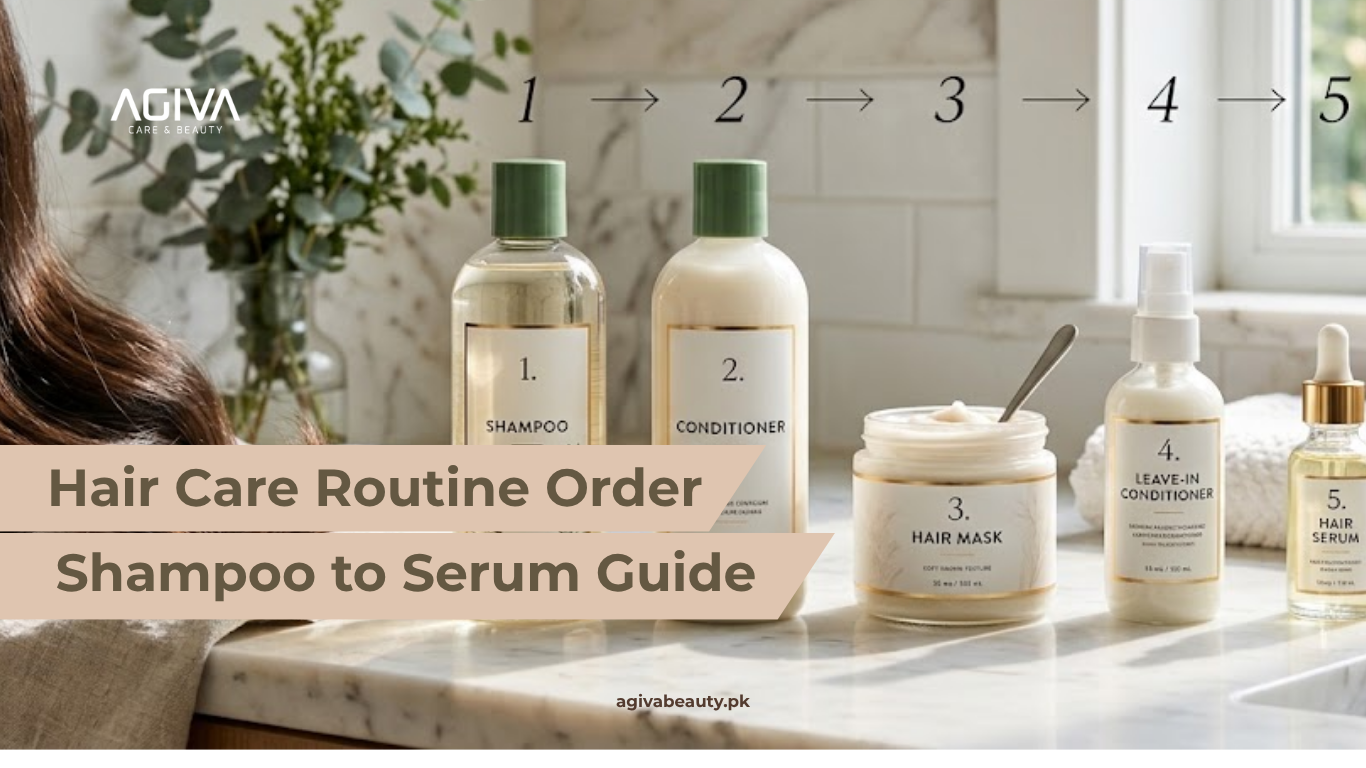
If you only remember one thing from this guide, make it this sequence:
- Shampoo — always first, to cleanse hair and scalp
- Hair mask — only on treatment days (1–2 times a week), applied right after shampoo
- Two-phase leave-in conditioner — applied to towel-dried hair after rinsing
- Hair serum — a light finishing layer on mid-lengths and ends
- Hair oil — most often used before shampoo, not after (more on this below)
That’s the core order for a wash day. The logic behind it is simple: each product needs the hair to be in a specific state — clean, damp, or towel-dried — for its ingredients to actually do their job, rather than sitting on top of a product that came before it and blocking absorption.
Why Hair Care Routine Order Matters for Pakistani Hair
This isn’t just a technicality. In Pakistan’s climate — hard water, high humidity for much of the year, and heavy heat styling use — hair is already dealing with more than average dryness, frizz, and mechanical stress. Applying products in the wrong order, or piling on too many at once, makes it harder for any single one to actually absorb and do its job, which means you’re not getting your money’s worth from the routine you’ve already built.
Step 1: Shampoo — Cleansing Comes First, Always
Every hair care routine starts with shampoo, and there’s no version of the order where that changes. Its job is to remove oil, sweat, styling residue, and everyday buildup from the scalp and hair — a clean base that every product afterward depends on.
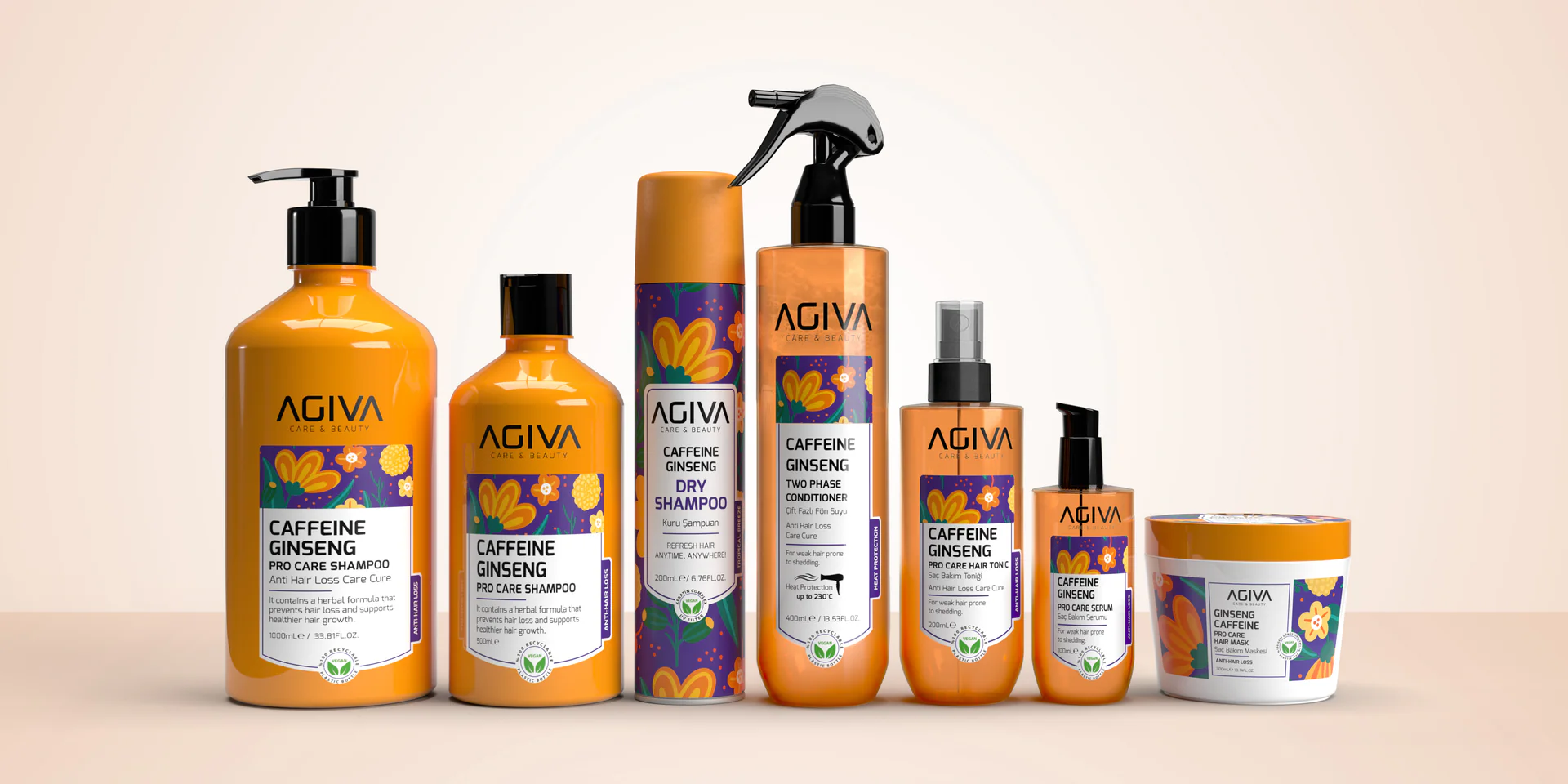
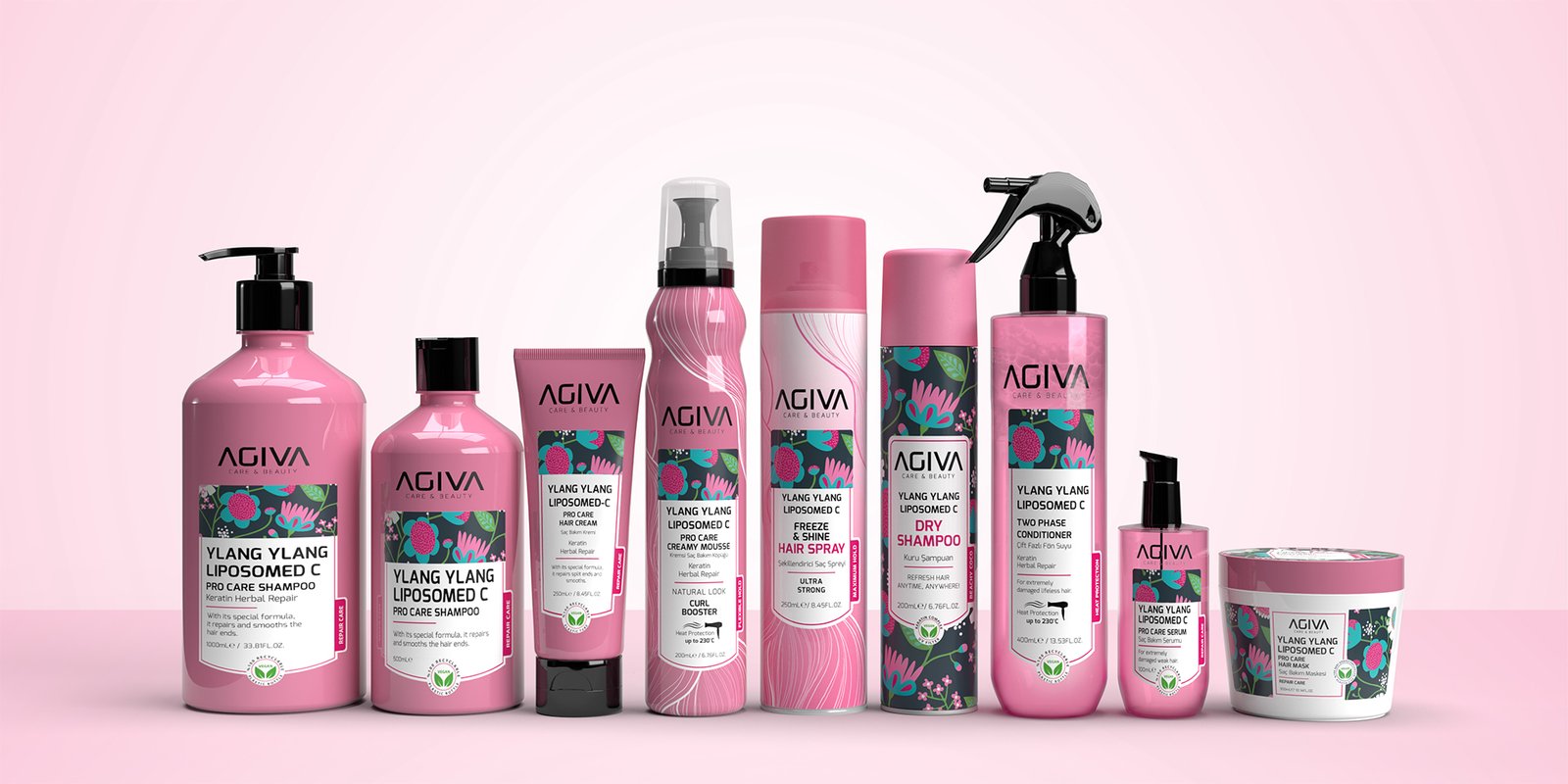
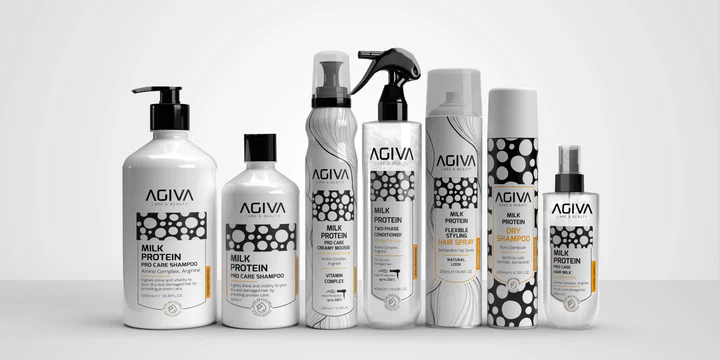
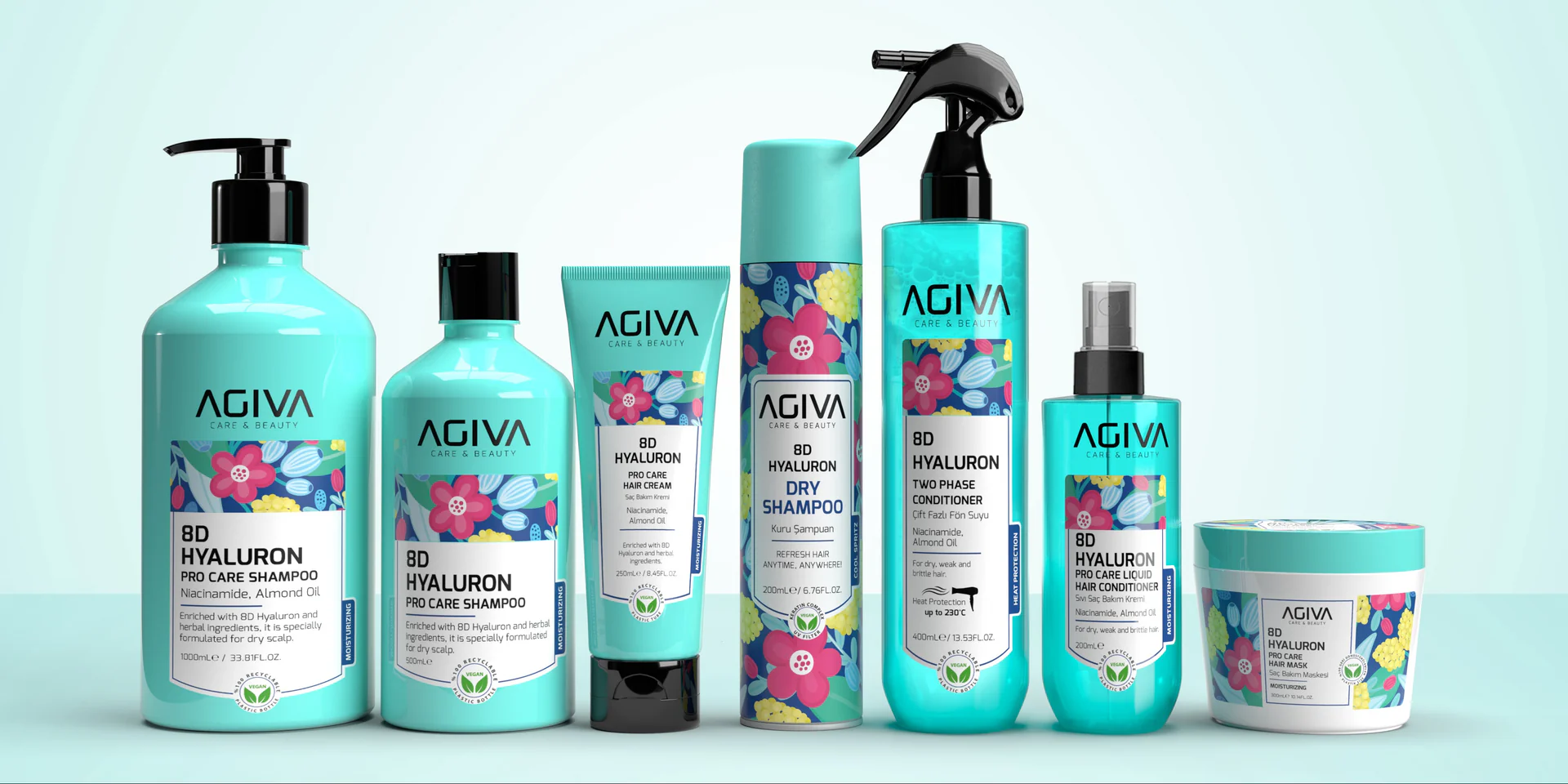
Agiva’s shampoo range covers different concerns, so the right starting point depends on what your hair actually needs:
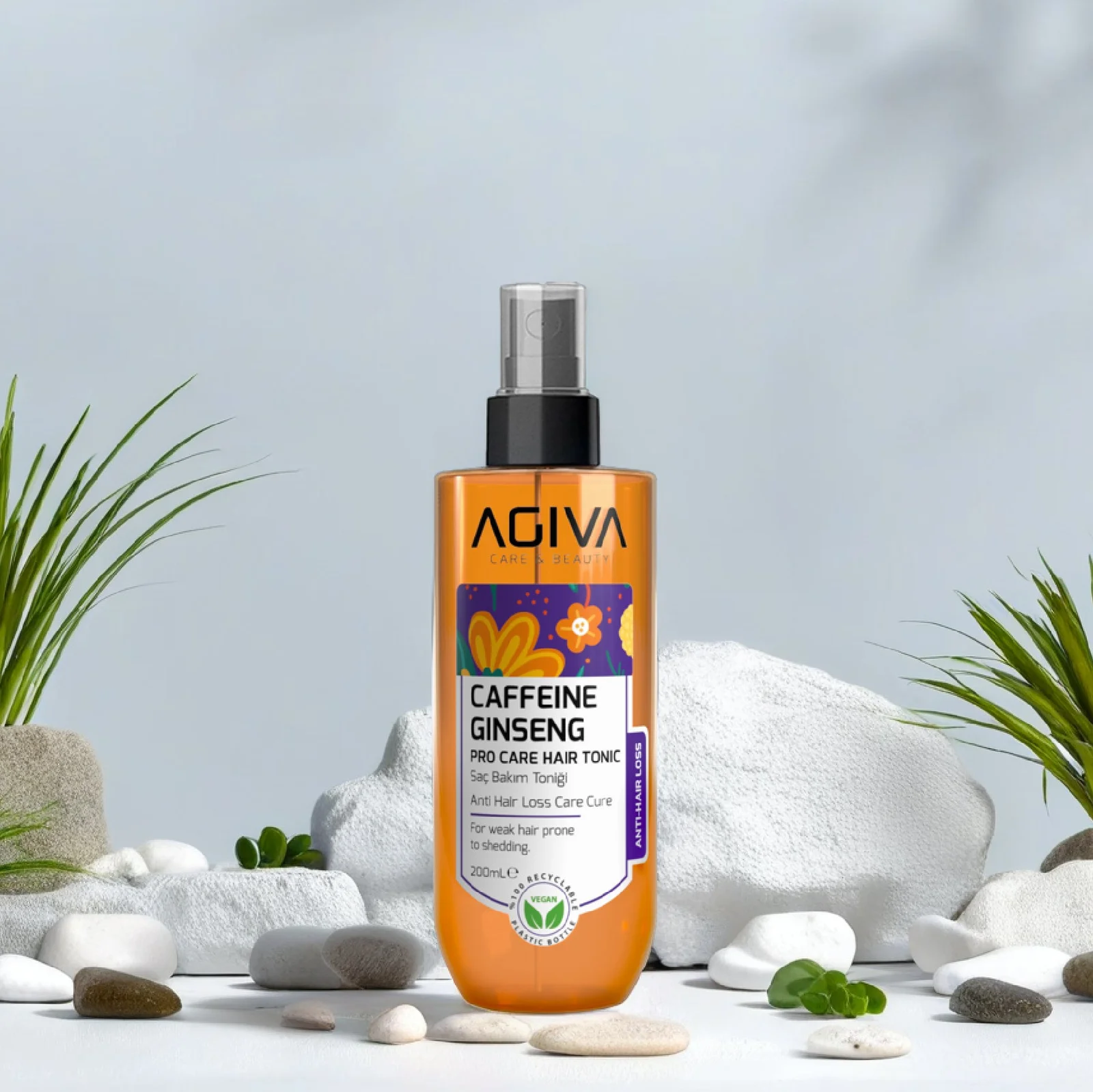
- Caffeine Ginseng Pro Care Shampoo for hair fall, thinning, or scalp support
- 8D Hyaluron Pro Care Shampoo for dry, dehydrated hair
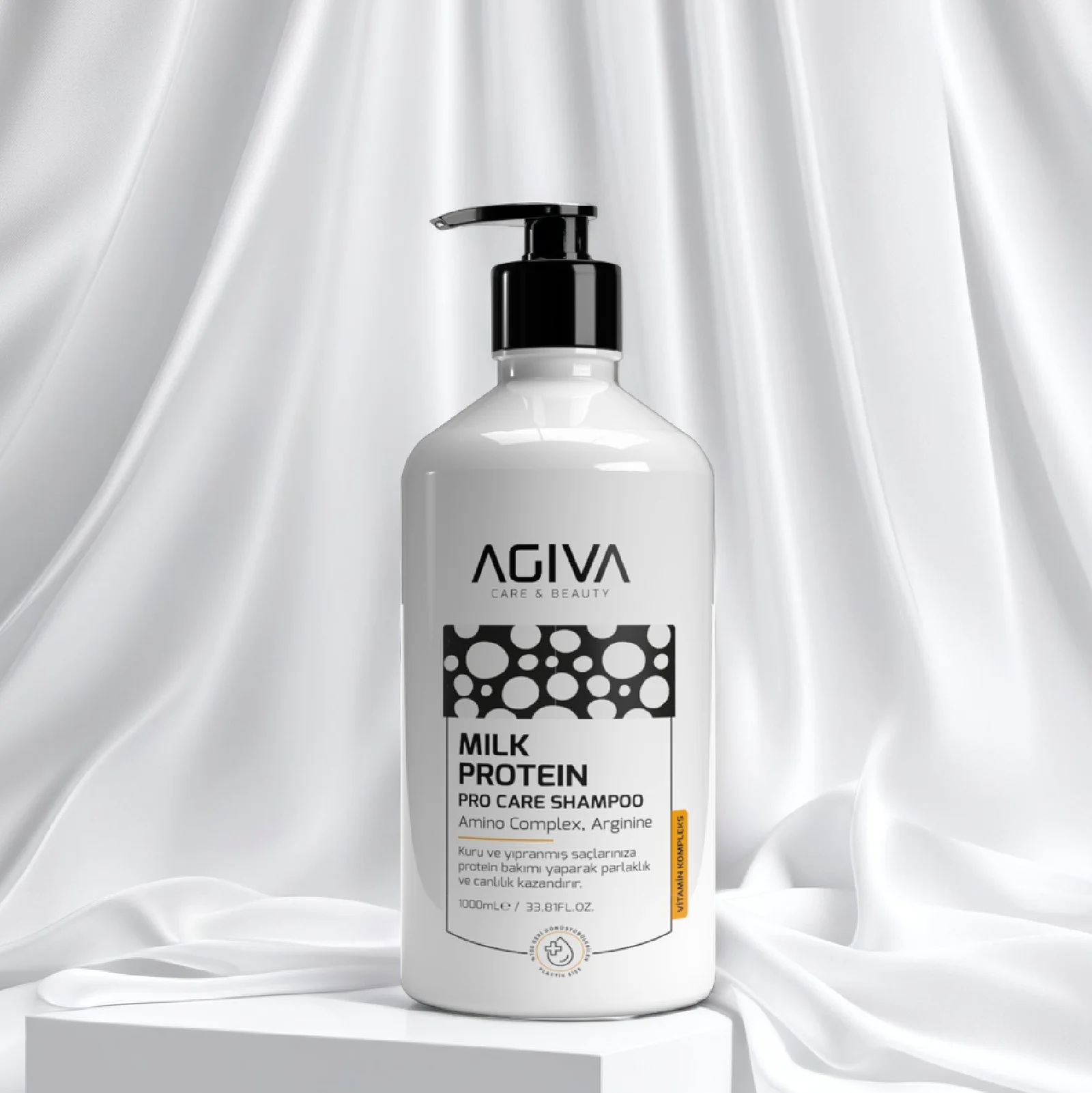
- Milk Protein Amino Complex Shampoo for damaged or chemically-treated hair
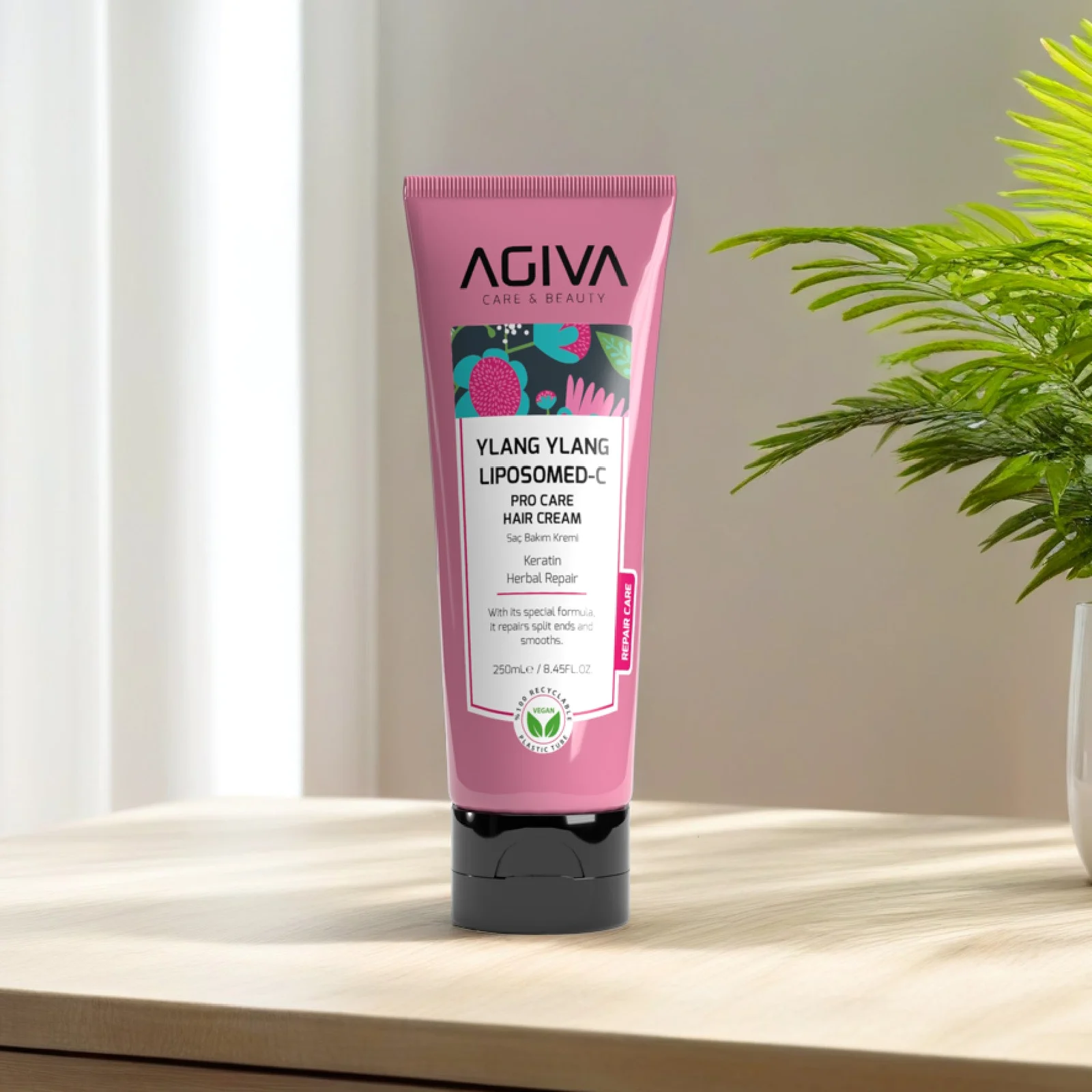
- Ylang Ylang Liposomed C Shampoo for color-treated or dull hair
Whichever one fits your concern, this step never moves — everything else in the routine builds on top of it.
Step 2: Hair Mask — The Weekly Deep-Treatment Step
Right after shampooing — while hair is still wet, not towel-dried — is when a hair mask goes on, but only on the days you’re using one. This isn’t a daily product; it’s a once or twice weekly deep-conditioning treatment.
The typical application: apply a generous amount from mid-lengths to ends on freshly shampooed, towel-blotted hair, leave it on for 5 to 10 minutes, then rinse thoroughly with lukewarm water. That short waiting window is what separates a mask from a regular conditioner — it needs a few minutes of contact time to actually penetrate rather than just coat the surface.
Agiva’s mask lineup mirrors the shampoo range, so you can stay within the same formula family for a consistent routine:
- Caffeine Ginseng Pro Care Hair Mask — strengthening, for weak or thinning hair
- 8D Hyaluron Pro Care Hair Mask — hydrating, for dry or dehydrated hair
- Milk Protein Amino Complex Hair Mask — repairing, for damaged or chemically-treated hair
- Ylang Ylang Liposomed C Hair Mask — antioxidant-rich, for color-treated or dull hair
On non-mask days, you skip straight from shampoo to the next step.
Step 3: Two-Phase Conditioner — Your Daily Leave-In Step
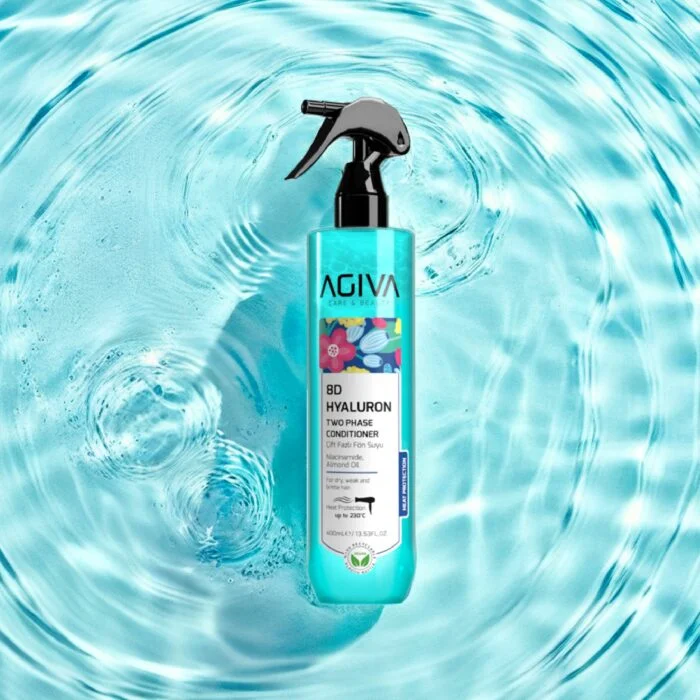
This is the step most routines are missing entirely. After rinsing (whether or not you used a mask that day), towel-dry your hair until it’s damp rather than dripping, then apply a two-phase leave-in conditioner from mid-lengths to ends. Shake it well first — that’s what blends the oil and water phases into an even, lightweight mix — comb it through, and don’t rinse it out.
Unlike the mask, this is a daily-use step, and it’s genuinely one of the most useful additions you can make to a routine, since it works on damp hair when strands are at their most fragile and prone to breakage during detangling.
Agiva’s two-phase conditioners follow the same four-formula system as the shampoos and masks:
- Caffeine Ginseng Two Phase Conditioner
- 8D Hyaluron Two Phase Conditioner
- Milk Protein Amino Complex Two Phase Conditioner
- Ylang Ylang Liposomed C Two Phase Conditioner
For a deeper breakdown of how this format works and which formula fits which concern, see our full guide to two-phase hair conditioners.
Step 4: Hair Serum — The Finishing Touch
Serum comes last in the wash-day sequence, applied to damp or dry hair right before styling. It’s a lightweight finishing product, meant for mid-lengths and ends only — not the scalp — where it smooths flyaways, adds shine, and creates a light protective layer before heat styling.
A small amount goes a long way here. One or two pumps distributed through the ends is typically enough; more than that just adds unnecessary weight. Agiva’s Caffeine Ginseng Hair Serum and Ylang Ylang Liposomed C Hair Serum both work this way — applied after the leave-in conditioner, before you pick up a blow dryer or straightener.
Where Does Hair Oil Actually Go?
This is genuinely the most misunderstood part of the entire routine, so it’s worth addressing directly: hair oil doesn’t automatically go last just because it’s listed last in most routine names.
In practice, hair oil works in two different ways, and they happen at opposite ends of the routine:
- Pre-wash treatment (the traditional and most effective use): oil is massaged into the scalp and lengths before shampooing, left on for at least 30 minutes — or overnight for deeper nourishment — and then washed out. This is how Agiva’s Rosemary Clove Pro Care Hair Oil is primarily meant to be used, 2 to 3 times a week, giving the scalp genuine time to absorb the oil rather than just sitting on top of already-styled hair.
- Post-wash finishing touch (a lighter, optional use): a few drops smoothed onto dry ends after your full routine, mainly to seal split ends or add extra shine for a special occasion. This use is much lighter than the pre-wash treatment and isn’t a substitute for it.
So if you’re building a wash-day routine and wondering where oil fits — the honest answer is usually before everything else, not after. Think of it as its own separate ritual on oiling days, not the final step layered on top of serum and conditioner.
Daily vs. Weekly: Building a Realistic Schedule
Not every step happens every day, and trying to do all of them daily is exactly how routines get abandoned within a couple of weeks. Here’s a more realistic weekly structure.
| Day Type | What You Do |
|---|---|
| Regular wash day | Shampoo → Two-Phase Conditioner → Serum |
| Mask day (1–2x/week) | Shampoo → Hair Mask → Two-Phase Conditioner → Serum |
| Oiling day (2–3x/week, separate from wash) | Pre-wash oil treatment → wash out with shampoo → continue routine as usual |
| Non-wash, busy day | Dry shampoo at the roots, styling product as needed |
Mask days and oiling days can overlap with a regular wash day, but they don’t have to happen every time you shampoo — that’s exactly what keeps the routine sustainable rather than overwhelming.
Where Hair Tonic and Styling Products Fit In
A couple of product types fall outside the core shampoo-to-serum sequence but are still worth knowing where to place.
Hair tonic — like Agiva’s Caffeine Ginseng Hair Tonic or Rosemary Clove Anti Hair Loss Hair Tonic — is applied directly to a clean, towel-dried scalp, typically after shampooing (and after conditioner, since it’s scalp-focused rather than a lengths product) or on non-wash days as a standalone scalp treatment. It’s not part of the core five-step sequence, but it slots in naturally for anyone focused on hair fall alongside their regular routine.
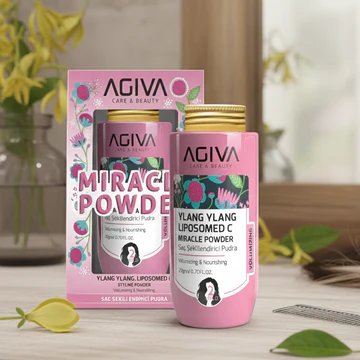
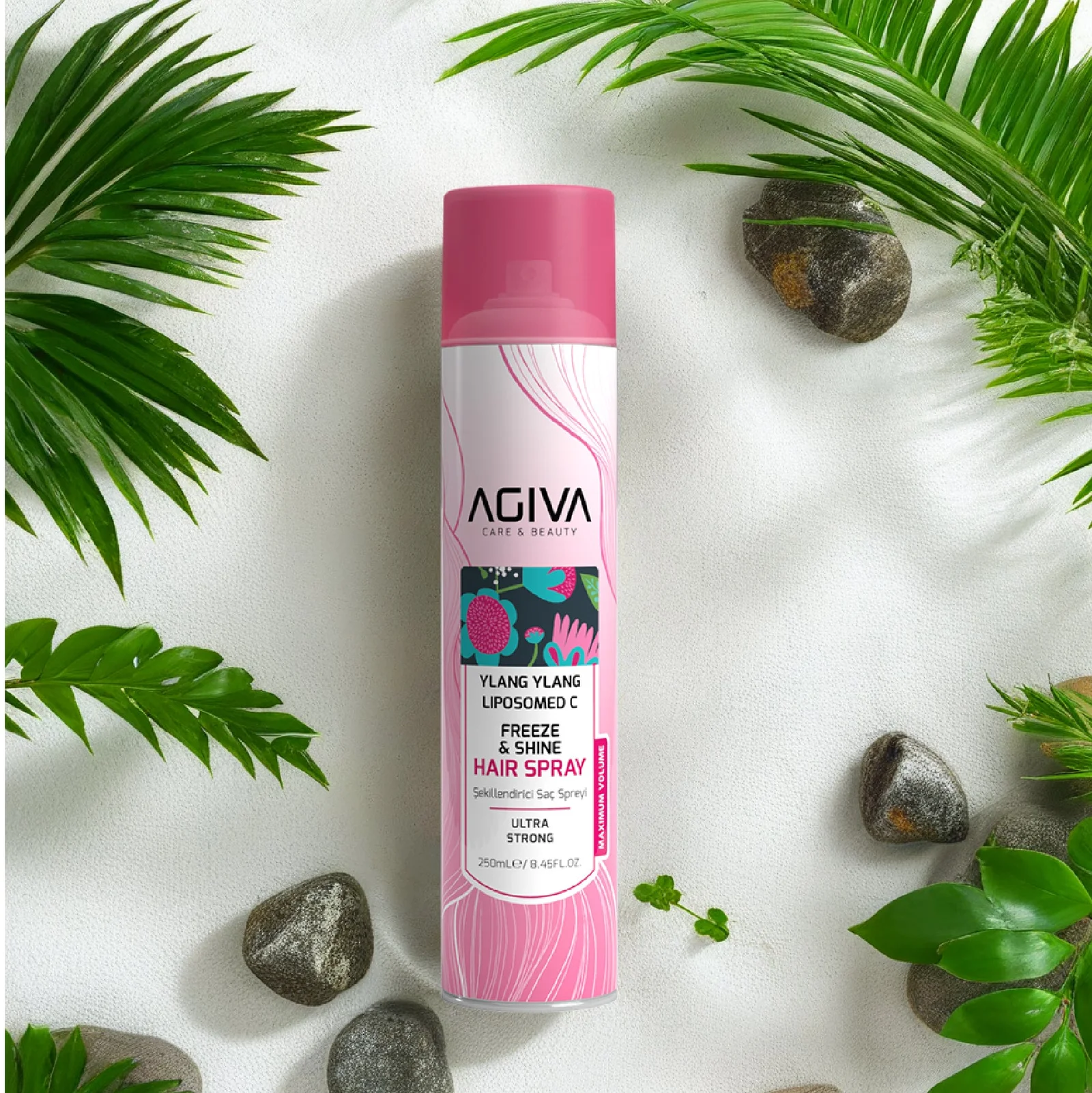
Styling products — mousse, hair spray, styling cream, or Milk Protein Miracle Styling Powder — always come last, after serum, and only when you’re actively styling. These are about hold, volume, or texture rather than hair health, so they sit on top of everything else rather than being absorbed into the hair.
Common Mistakes People Make With Product Order
- Applying serum before the leave-in conditioner. This traps the conditioner underneath a sealing layer and stops it from absorbing properly.
- Using a hair mask every single wash. Masks are intensive treatments — daily use can lead to buildup and actually weigh hair down over time.
- Skipping the leave-in conditioner because “regular conditioner” isn’t part of the routine. A two-phase leave-in isn’t optional extra step; it’s doing the job a rinse-out conditioner would in a traditional routine.
- Treating hair oil as a post-styling finishing product only. Skipping the pre-wash treatment use means missing out on where oil does its most meaningful work.
- Piling on too many products in one sitting. More layers don’t mean more benefit — each product needs room to actually do its job.
Expert Tips for Layering Products Correctly
- Work from thinnest to thickest texture if you’re combining multiple leave-in products — water-based sprays before creams, creams before oils.
- Stick to one formula family (Caffeine Ginseng, 8D Hyaluron, Milk Protein, or Ylang Ylang) across shampoo, mask, and conditioner for a genuinely complementary routine rather than mixing actives that don’t reinforce each other.
- Apply leave-in products to damp, not soaking wet, hair — too much water dilutes the formula and makes even distribution harder.
- Reserve the hair mask for a fixed day each week (Sunday evenings work well for a lot of people) so it becomes a habit rather than something you forget for a month at a time.
- Don’t skip the pre-wash oil step just because it takes planning. Even 30 minutes before a shower is enough to make a real difference, and it doesn’t need to be an overnight commitment every time.
FAQs
1. What is the correct hair care routine order?
The general hair care routine order is: shampoo first, followed by a hair mask on treatment days, then a leave-in two-phase conditioner on towel-dried hair, and finally a lightweight serum on mid-lengths and ends before styling. Hair oil is the exception — it typically works best as a pre-wash treatment rather than a step added at the end.
2. Does hair oil go before or after shampoo?
Most commonly, before. Hair oil is traditionally massaged into the scalp and hair, left on for at least 30 minutes (or overnight), and then washed out with shampoo. Applying a few drops to dry ends after your full routine is a lighter, optional use, but it isn’t a substitute for the pre-wash treatment.
3. Should I use a hair mask and a leave-in conditioner on the same day?
Yes, they work well together and aren’t interchangeable. Use the hair mask right after shampooing on treatment days, rinse it out, then follow with the leave-in two-phase conditioner on towel-dried hair as you normally would — the mask deep-conditions, while the leave-in protects and detangles for the rest of the day.
4. How often should I follow the full hair care routine order?
The core order — shampoo, conditioner, serum — can be followed every wash day. The hair mask is a weekly addition, used once or twice a week rather than daily, and pre-wash oiling typically happens two to three times a week as its own separate step, not tied to every single wash.
5. Can I skip the conditioner step and just use a serum?
It’s not recommended if you want the full benefit of the routine. A two-phase leave-in conditioner works on damp hair to detangle and add lightweight moisture, while a serum is a much lighter finishing product for shine and frizz control. Skipping the conditioner means missing the step that does the most to reduce breakage from daily combing and styling.
6. Is this hair care routine order the same for oily and dry hair?
The sequence stays the same, but the formulas you choose within each step should match your hair type. Oily or hair-fall-prone scalps generally do better with a caffeine and ginseng-based shampoo, mask, and conditioner, while dry or dehydrated hair benefits more from a hydration-focused hyaluronic acid formula across the same steps.
Final Verdict
Getting the hair care routine order right isn’t about owning more products — it’s about using the ones you already have in a sequence that actually lets each one do its job. Shampoo cleanses, a weekly mask deep-conditions, a two-phase leave-in conditioner protects damp hair through the day, and a light serum finishes things off. Hair oil, despite being listed last in most routine names, usually does its best work before you even step into the shower.
Once the order clicks, the whole routine stops feeling like guesswork and starts actually showing in how your hair looks and behaves week to week.
Ready to build your routine? Explore Agiva’s full range across shampoo, conditioner, hair masks, and hair serums at agivabeauty.pk and pick the formula family that matches your hair’s biggest concern.