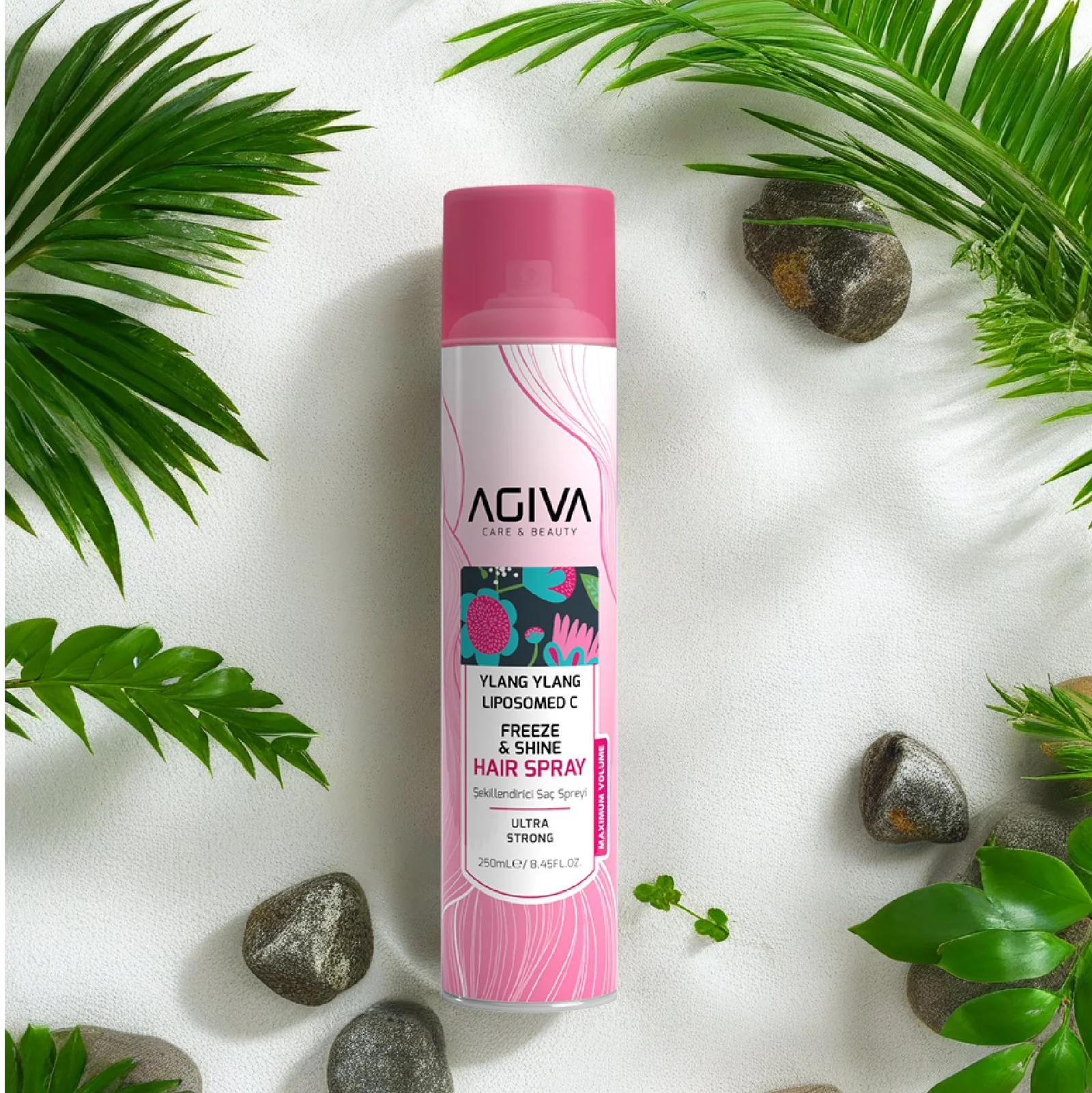



Somebody in your family has probably come back from Dubai or Istanbul with a bag of imported shampoo and a very firm opinion about it. Maybe you laughed. Maybe you finished the bottle in a month. Either way, the question behind that bag is a fair one: is a Turkish hair care brand in Pakistan really worth the extra money, or is “imported” just a polite word for “expensive”?
We sell Agiva, which is a Turkish range, so we are not a neutral voice and we will not pretend to be. What we can do is be useful. This guide explains why Turkey has a serious name in beauty manufacturing, what the word “Turkish” should and should not mean on a label, how Agiva’s four ranges differ, and how to check any imported brand before you pay for it. If you are comparing Turkish hair care products with what you already use, this should save you some guesswork.
Table of Contents
- Why So Many Shoppers Are Asking About Turkish Hair Care
- What Does a Turkish Hair Care Brand in Pakistan Actually Mean?
- Why Turkey Is a Serious Place to Make Hair Care
- Why Turkish Hair Care Feels Familiar to Pakistani Shoppers
- Agiva ProCare: The Turkish Range We Sell
- Turkish Origin Is Not a Magic Guarantee
- Seven Checks Before You Buy Any Imported Hair Care Brand
- Why Popular Imports Get Copied
- A Simple First Routine With a Turkish Range
- Common Mistakes
- Tips Worth Following
- FAQs
- Final Verdict
Why So Many Shoppers Are Asking About Turkish Hair Care
You will not find a headline here saying Turkish brands are “taking over” Pakistan’s beauty market. Nobody publishes reliable market share numbers for this niche, and we would rather not invent any.
What is easy to see is that shoppers have more imported choices than they did a few years ago, and more reasons to ask where a bottle really comes from. Hard water, humid summers, daily hair dryer use and the pressure of looking good at every wedding season have made people read labels more carefully. That curiosity is healthy. It just needs better answers than a pretty box and a high price tag.
What Does a Turkish Hair Care Brand in Pakistan Actually Mean?
The word “Turkish” on a bottle can mean different things, and it helps to know which one you are paying for.
| What you see | What it may mean | What to ask |
|---|---|---|
| Brand owned in Turkey, formulated and manufactured in Turkey, imported to Pakistan | The strongest meaning of the claim | Who imports it here, and can they confirm the origin? |
| Turkish brand name, manufactured in another country | Possible, and not always a problem | Where is it actually made? |
| Turkish-looking packaging, no clear origin or importer details | Often only a marketing choice | Treat it as unverified until the seller proves otherwise |
Agiva says on its website that its beauty and personal care range is 100% Turkish imported, and the Agiva Pakistan website states that its products are designed and made in Turkey. You can read the longer story on our brand story page.
A claim is still only a claim, so use the checklist further down on any brand, ours included.
Why Turkey Is a Serious Place to Make Hair Care
Turkey is not a newcomer to this business. An academic review of the sector, citing Trade Ministry figures, puts Turkish cosmetics exports at about USD 1.34 billion in 2022, up roughly 40 percent from 2020 (source). A market overview prepared for the Beauty Istanbul trade fair said the industry was already exporting to more than 190 countries as of 2017. And according to a Trade Ministry sector report, as reported by Anadolu and Bazaar Times, the domestic market has been growing by about 10 percent a year on average.
Size alone does not make a shampoo good, so the rules matter more. Turkish cosmetic law is built around the European Union’s cosmetics regulation, (EC) No 1223/2009. A new Cosmetic Products Regulation, published in Turkey’s Official Gazette on 8 May 2023, was prepared within that EU framework. The Turkish Medicines and Medical Devices Agency (TITCK) has also run a system for reporting side effects from cosmetics since 2012, and it can have a product recalled if it is not found suitable.
In plain words, a company making hair care in Turkey works under rules that look a lot like European ones. That is a useful baseline, and Turkish beauty brands generally operate inside it.
It is not a stamp of approval on every bottle. It says nothing about whether a formula suits oily roots, bleached ends or a hard-water tap in Lahore.
Why Turkish Hair Care Feels Familiar to Pakistani Shoppers
There is a softer reason too. Turkey and Pakistan have long been close, and Turkish dramas have a big following here. The two governments have even talked publicly about closer trade and joint broadcasts. For many shoppers, a label from one of the Turkish beauty brands simply feels less foreign than most.
Familiarity is not proof of quality, though. These are the things that should actually count:
- A professional background. Agiva’s own brand material describes a history in men’s grooming and salon products, and says the range is sold in Europe, North America, South Africa and the Middle East. That is the kind of background behind salon-grade hair care, but please treat it as the brand’s statement, not an independent audit.
- Concern-based ranges. Instead of one shampoo for everybody, you choose by problem: hair fall, dryness, damage or colour.
- Conditions here. Agiva says its ProCare range is tailored to dust, humidity, hard water and heat styling in Pakistan. We would suggest judging that by your own results over a month, not by anyone’s marketing, including ours.
- A fair price question. A 500ml shampoo at ₨2,695 sits above everyday supermarket shampoos, so it is reasonable to ask what the extra money buys. The honest answer is targeted active ingredients and a full routine built to work together. Whether that is worth it depends on your hair and your budget.
Agiva ProCare: The Turkish Range We Sell
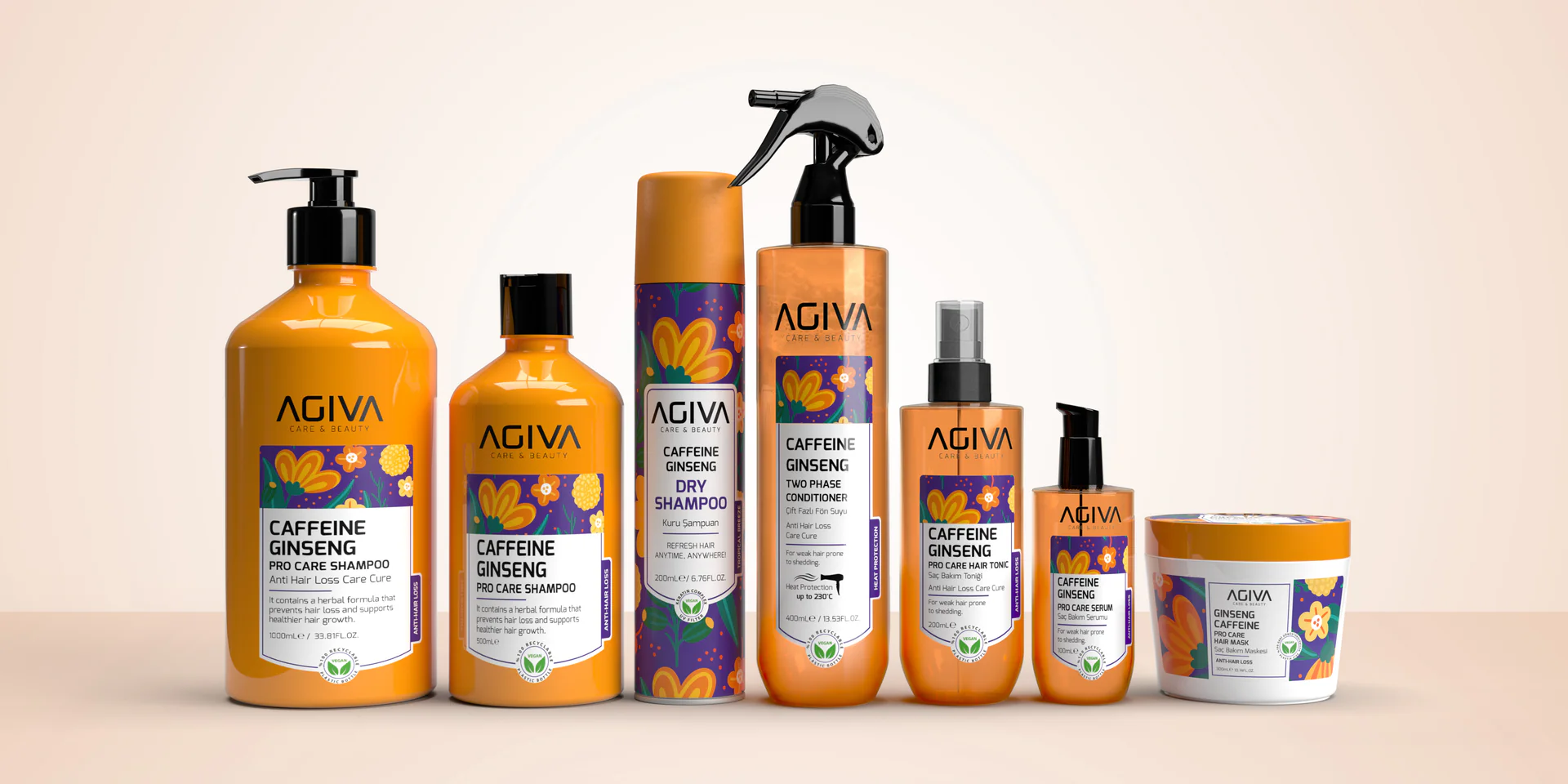
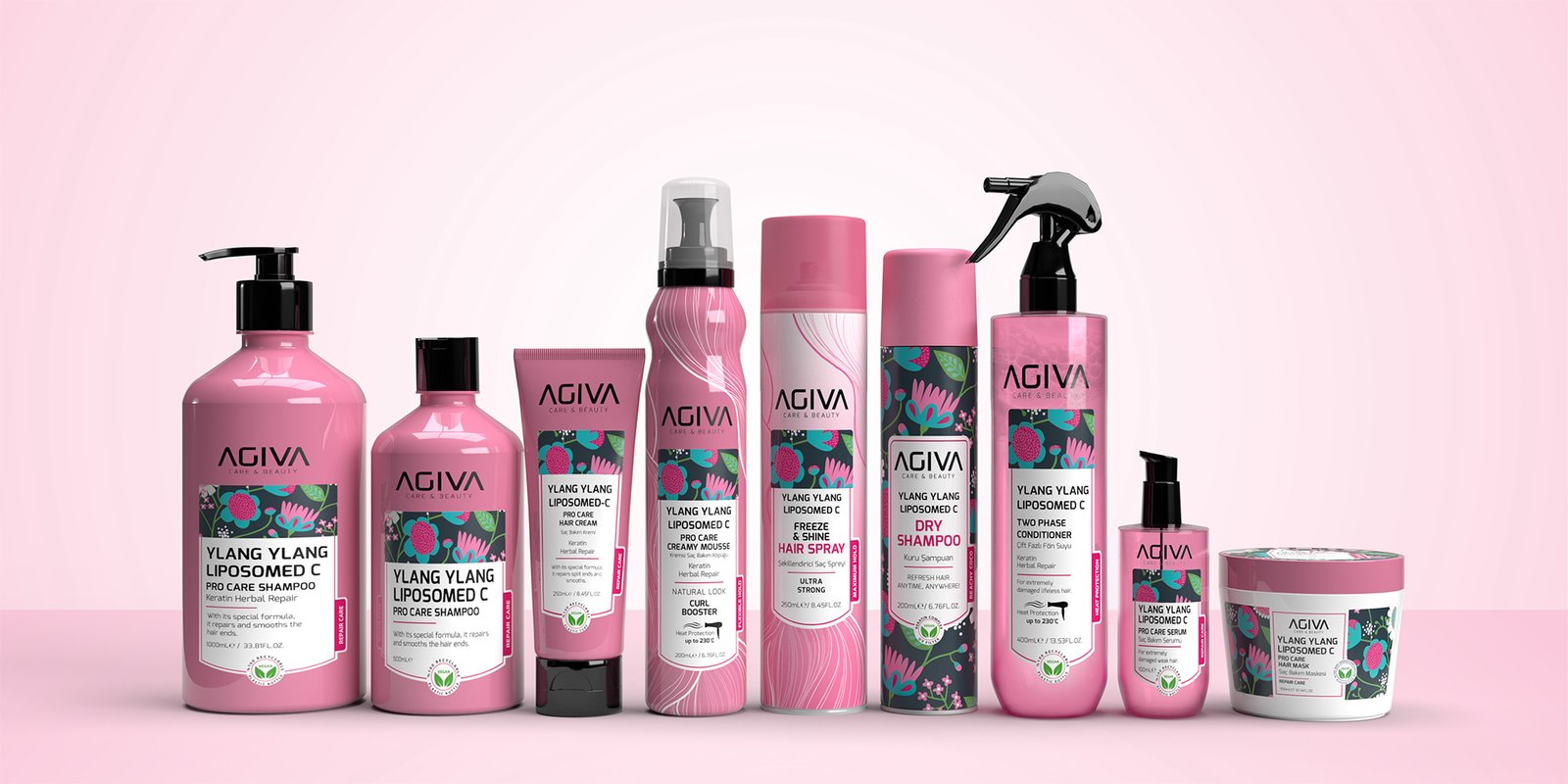
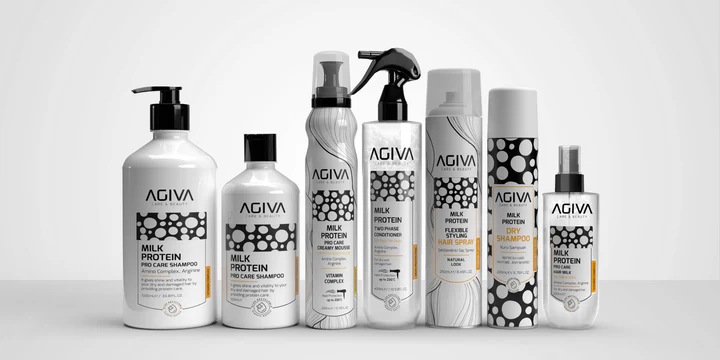
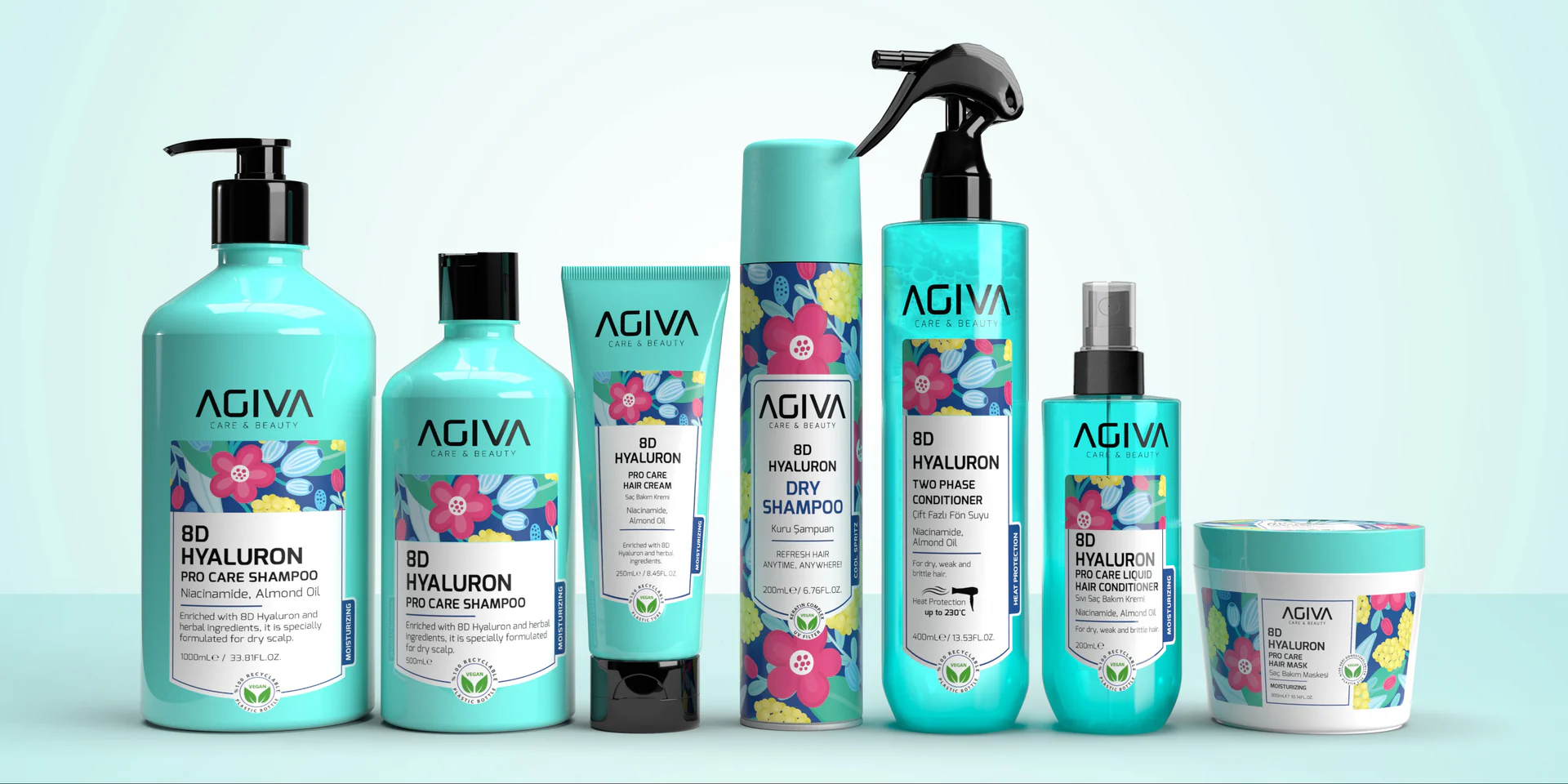
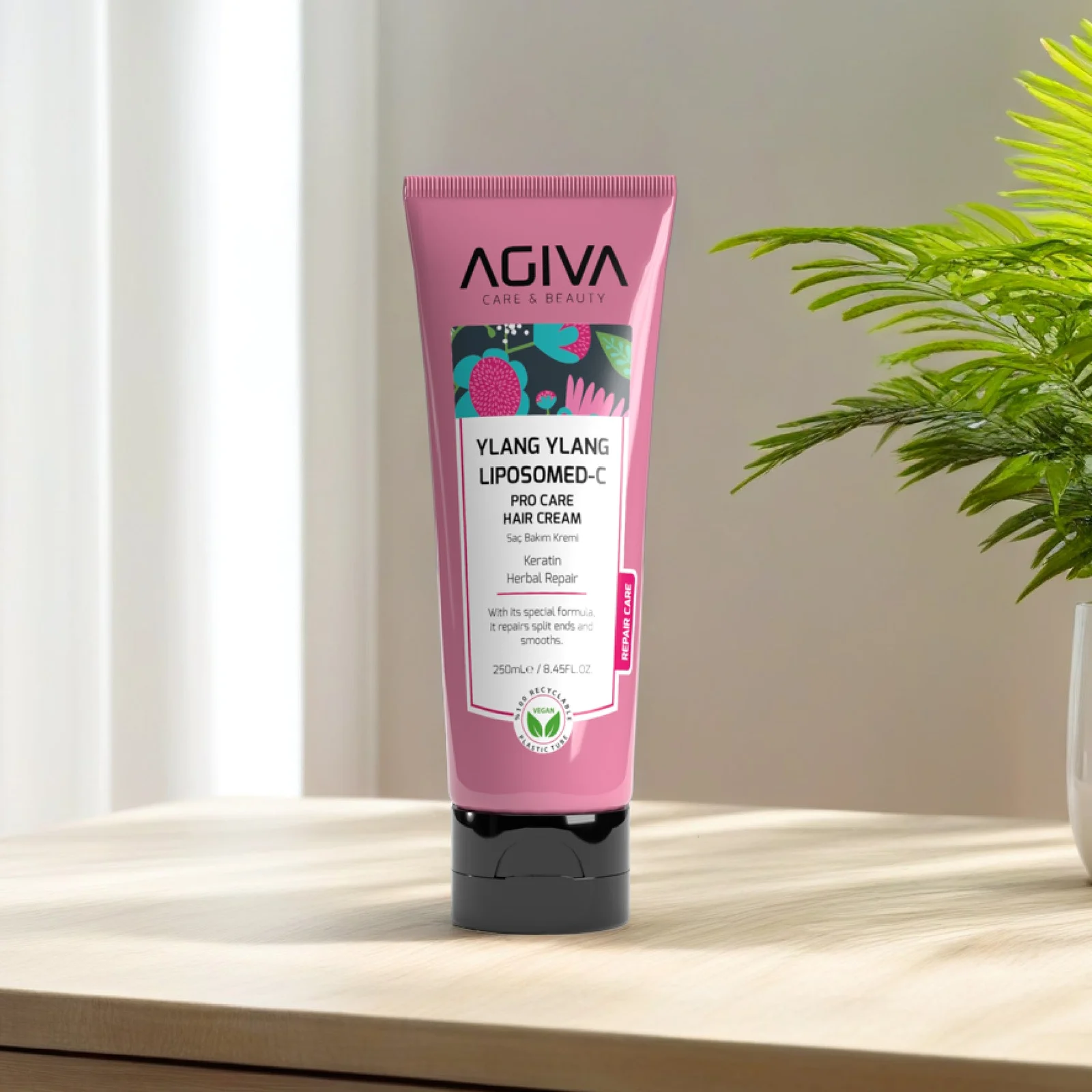
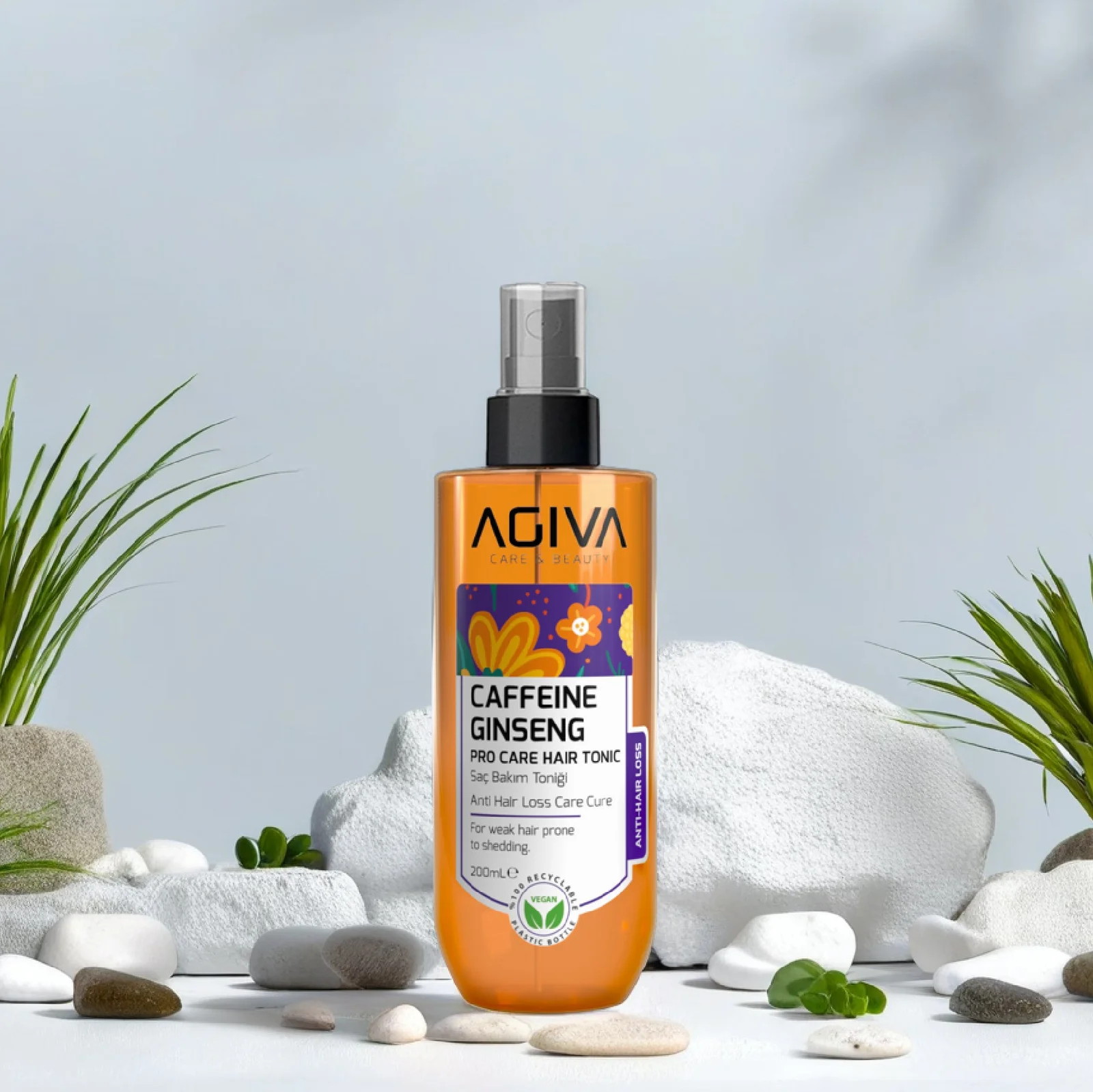
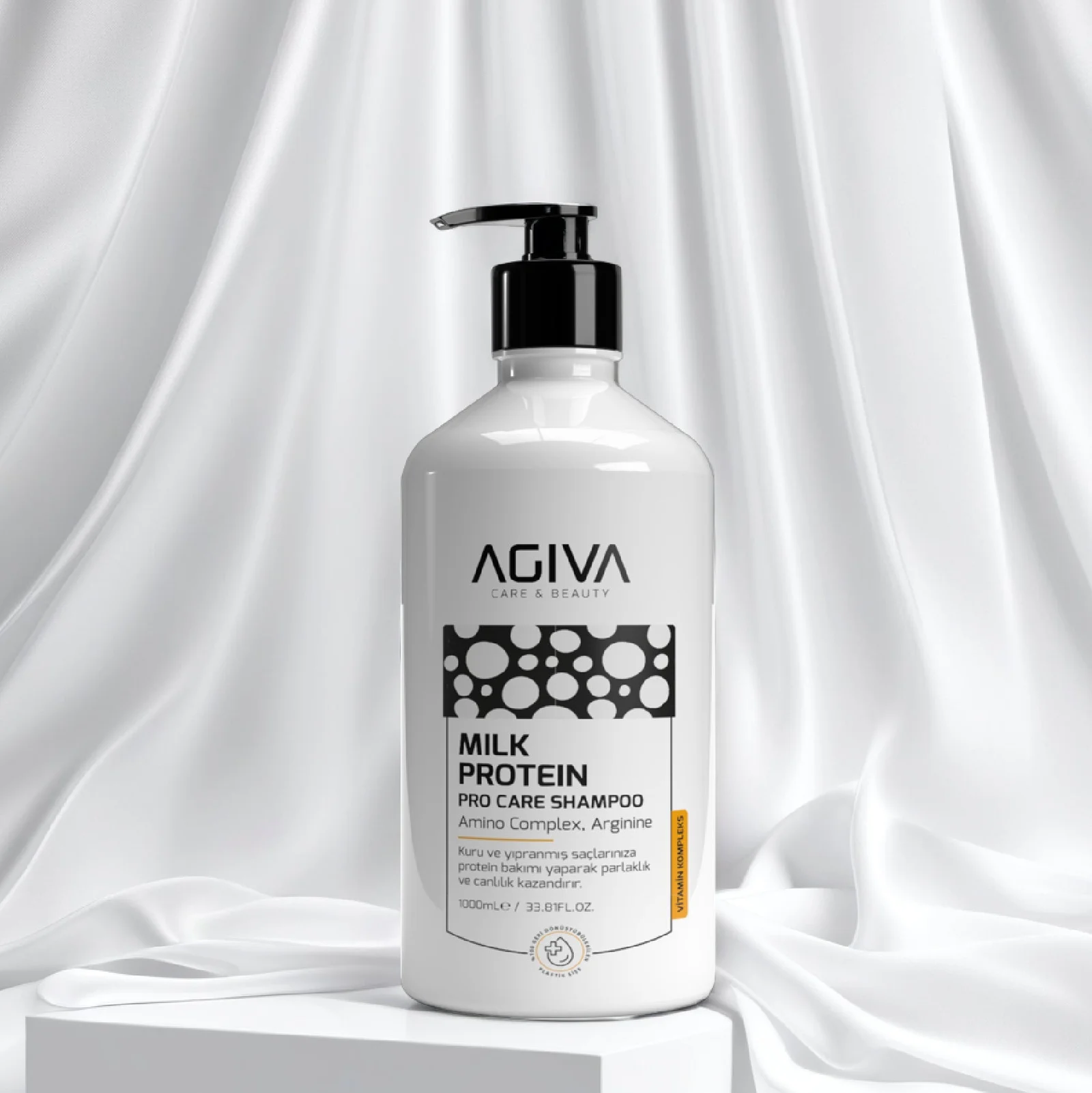
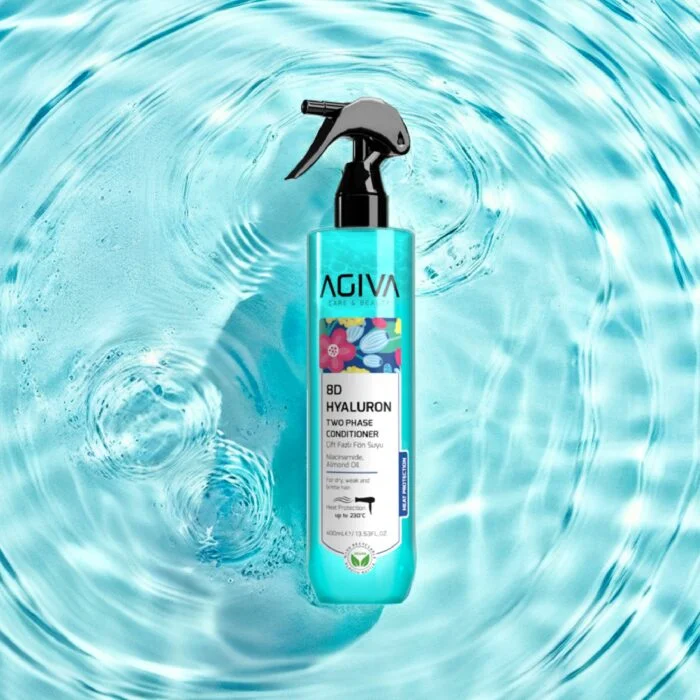
Agiva has four main ranges, which the brand positions as salon-grade hair care. Each one has its own shampoo, conditioner, mask and finishing products, so you can stay in one family or mix them.
| Range | Built around | Starter shampoo (500ml) | Matching conditioner (400ml) |
|---|---|---|---|
| Caffeine Ginseng | Hair fall and weak roots | Caffeine Ginseng Shampoo, ₨2,695 | Two Phase Conditioner, ₨2,695 |
| 8D Hyaluron | Dry, dehydrated, frizzy hair | 8D Hyaluron Shampoo, ₨2,695 | Two Phase Conditioner, ₨2,695 |
| Milk Protein Amino Complex | Damaged and chemically treated hair | Milk Protein Shampoo, ₨2,695 | Two Phase Conditioner, ₨2,695 |
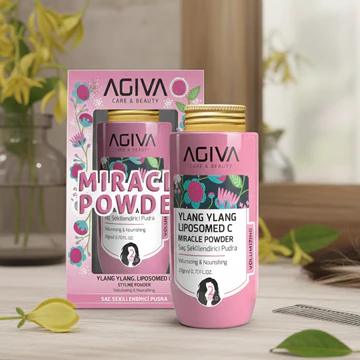
| Ylang Ylang Liposomed C | Coloured, dull, tired hair | Ylang Ylang Shampoo, ₨2,695 | Two Phase Conditioner, ₨2,695 |
Prices were correct when we last checked and can change, so please confirm on the product page. Our price guide for Agiva shampoos lists every size.
If you are looking for Turkish shampoo in Pakistan, a few details are worth knowing before you add anything to the cart:
- Agiva lists its shampoos as sulfate-free. Our guide to sulfate-free shampoo in Pakistan explains who benefits from a sulfate-free shampoo and how to confirm the claim on the ingredient list.
- The “conditioner” is a leave-in spray, not a cream you rinse off. Our two-phase conditioner guide explains how it works.
- Beyond the basics, the professional hair care range includes masks (the 300ml 8D Hyaluron mask is ₨3,245), a Caffeine Ginseng hair tonic at ₨2,145 for the scalp, serums for the ends, and a Caffeine Ginseng dry shampoo at ₨2,194.50 for busy mornings.
Choosing a Turkish Hair Care Brand in Pakistan for Your Hair Type
Start from your biggest problem, not from the bottle you like the look of. These guides go deeper on each one:
- Hair fall or thinning: read shampoo for hair fall and thinning hair, shampoo for weak roots and hair strength and the best shampoo for hair loss in Pakistan. Men may prefer our anti hair fall shampoo guide for men. If someone mentions a “growth serum”, this article explains why a tonic and a serum are different things.
- Dry hair: see the best shampoo for dry hair in Pakistan.
- Damaged hair: start with the best shampoo for damaged hair, then the milk protein shampoo guide and our comparison of the best milk protein shampoo for dry hair.
- Coloured or dull hair: our write-up on ylang ylang liposomed C shampoo explains what the ingredients actually do.
- Oily roots on busy days: see how a dry shampoo helps oily hair and our notes on the Caffeine Ginseng Pro Care dry shampoo.
- Flakes and itch: a shampoo range is not a dandruff treatment. Read dandruff treatment in Pakistan first.
Turkish Origin Is Not a Magic Guarantee
We would rather you hear this from us than find out after paying.
- Origin does not decide fit. A shampoo made in Turkey can still be wrong for your scalp. Match the formula to your problem.
- A shampoo cannot replace a doctor. Sudden, patchy or heavy hair loss, a painful scalp or stubborn scaling needs a dermatologist, whichever brand you use.
- Price matters. If ₨2,695 for a 500ml bottle is stretching your budget, that is a legitimate reason to wait. Do not buy a professional hair care range you will use half-heartedly.
- Results take time. Give any new routine around four weeks before judging it. Hair that has taken years to get tired will not recover in a week.
- Check the format. If you want a thick rinse-off conditioner, the two-phase leave-in spray is a different experience.
Seven Checks Before You Buy Any Imported Hair Care Brand
These apply to imported hair care products in Pakistan of every origin, not just Turkish ones.
| Step | What to check | Why it matters |
|---|---|---|
| 1 | Look for a clear “made in Turkey” or country-of-origin statement | Vague origin is the first sign of a weak claim |
| 2 | Find out who imports or sells it in Pakistan, with a phone or email you can reach | You need someone accountable if something goes wrong |
| 3 | Read the ingredient list, not only the front label | “Sulfate-free” or “natural” on the front proves nothing by itself |
| 4 | Check the batch code and expiry date | Missing or smudged codes are a warning sign |
| 5 | Compare the price with the brand’s official listing | A price far below it is rarely a bargain |
| 6 | Buy from the official website or a seller the brand confirms | Agiva’s product pages mention authorised sellers, so ask us to confirm any seller you are unsure about |
| 7 | Start with a smaller bottle | A 500ml bottle is a cheaper test than a 1000ml one |
Questions about a seller or a bottle? Our contact page is the quickest way to check.
Why Popular Imports Get Copied
Anything people trust gets imitated, and imported hair care products in Pakistan are an easy target. Consumers Voice Pakistan has said that about 65% of consumer products sold in the country are counterfeit, and shampoo is easy to copy because the bottle is cheap to reproduce and the label does most of the selling.
That is why a real original imported shampoo is worth more than the price tag suggests. A fake can irritate your scalp, and you will not know what is inside it.
We wrote two guides for this. How to spot fake shampoo in Pakistan shows what to look for on the bottle, and how to buy origial hair care products online in Pakistan covers sellers, payment methods and what to do if something goes wrong.
A Simple First Routine With a Turkish Range
You do not need ten products. A sensible starting point looks like this:
- Shampoo the scalp with your matching 500ml bottle and rinse well.
- Conditioner spray on towel-dried mid-lengths and ends, shaken first. Keep it off the roots.
- Mask once a week if your hair is dry or damaged.
- Tonic or serum only if you have a reason: a tonic for the scalp, a serum for the ends.
- Dry shampoo on rushed mornings, instead of skipping scalp care altogether.
The order matters more than most people think, and our guide to the right order to apply hair products explains it step by step.
Common Mistakes
- Buying on the word “Turkish” alone. Origin is one clue, not a reason to skip the other checks.
- Choosing the prettiest bottle. Choose the one that matches your main hair problem.
- Trusting “authorised seller” claims without asking. Ask the brand to confirm.
- Starting five new products in one week. If something irritates you, you will not know which one caused it.
- Judging after a few days. Four weeks is a fairer test.
- Putting the leave-in spray on the scalp. It is meant for the lengths.
Tips Worth Following
- Take a photo of the batch code when the bottle arrives, and keep the box until you finish the product.
- Note the date you start so you can compare your hair after a month.
- If your scalp is sensitive or has reacted to products before, try a small amount first.
- Use a wide-tooth comb on wet hair, because wet strands break more easily.
- Ask before you buy. A short message is cheaper than a wrong bottle.
FAQs
1. What is a Turkish hair care brand in Pakistan?
It is a hair care brand that is based in Turkey, manufactured there and imported for sale in Pakistan. The words on the label can be misleading, so check where it is made, who imports it, and whether the seller can give you a contact you can reach. Agiva is one example, and we explain how to verify any brand in this guide.
2. Is Agiva really a Turkish brand?
Agiva states that its range is 100% Turkish imported, and the Agiva Pakistan website says its products are designed and made in Turkey. We encourage you to verify any brand yourself by asking for importer details, checking the batch code and reading the ingredient list. You can message us through our contact page if you want us to confirm a bottle or a seller.
3. Are Turkish hair care products better than local ones?
Not automatically. Turkish cosmetic law is closely aligned with European rules, which is a good baseline, but plenty of local products are also good. What matters is whether the formula matches your hair problem, whether you can afford to use it consistently, and whether you are buying the genuine product.
4. Is Turkish shampoo in Pakistan sulfate-free?
Agiva lists its shampoos as sulfate-free, but a sulfate-free shampoo claim does not apply to every Turkish brand. Always read the ingredient list for sodium lauryl sulfate or sodium laureth sulfate before trusting a front-label claim. Our sulfate-free guide explains who benefits and who may not need to switch.
5. How can I tell an original imported shampoo from a fake?
Check the price against the official listing, look for a clear, consistent batch code, examine the print quality and spelling on the label, and buy from the brand’s website or a seller the brand confirms. If the texture or smell differs from what you expect, stop using it and contact the seller and the brand.
6. Are Turkish shampoos suitable for Pakistan’s hard water?
Agiva says its ProCare range is tailored to Pakistani conditions, and a sulfate-free formula can be gentler on hair that already struggles with hard water. We would still treat that as a starting point. Use it consistently for about four weeks and judge by how your hair feels, not by the label.
7. Where can I buy Agiva and how much does it cost?
If you want Turkish shampoo in Pakistan from a source you can trust, the official website, agivabeauty.pk, is the most reliable. A 500ml shampoo is ₨2,695, a 1000ml shampoo is ₨4,950 and a 200ml dry shampoo is ₨2,194.50 at the time of writing. Prices can change, so confirm on the product page, and ask us to verify any other seller.
Final Verdict
A Turkish hair care brand in Pakistan is worth considering when three things line up: the origin is clearly stated and checkable, the formula matches your actual hair problem, and you are buying an original imported shampoo from a source you can trust. Turkey’s cosmetics sector is large, regulated along European lines and used to exporting, which is a good start. It still does not replace reading the label, starting small and being patient. That applies to all Turkish hair care products, ours included.
If that sounds like what you want, start with one 500ml shampoo that matches your biggest concern and give it a month.
Ready to try it? Browse the Hair Shampoo collection, the Hair Conditioner collection or the full Agiva shop at agivabeauty.pk, and message us through the contact page if you are unsure which range to pick.